Account Suspensions and Limitations: Holding Platforms Accountable
We are speaking out against platforms that suspend and limit accounts in an arbitrary and non-transparent manner—and we are fighting to ensure that users can assert their rights against the major digital platforms.

The major digital platforms—such as Instagram and TikTok—have long faced criticism for not taking decisive enough action against illegal and harmful content, such as hate speech or fraud. Such content remains far too common on these platforms. Platform operators are now attempting to get it under control primarily through automated moderation systems. However, this has created new problems.
The platforms’ automated moderation practices carry many risks: For example, the algorithms on which automated moderation is based are highly prone to errors. They often flag supposedly illegal content because, for instance, they fail to properly understand the context of a post. Furthermore, users whose accounts have been suspended or limited often do not receive any explanation—or only a vague one—for the action. In some cases, the platforms do not even notify users of the restrictions—a so-called “shadowban.”
Platforms Bear Responsibility for Their Users’ Fundamental Rights
This violates users’ fundamental rights because it prevents them from freely expressing their opinions (Art. 5 (1) of the German Basic Law) or—in the case of influencers and artists—from practicing their profession (Art. 12) or pursuing their art (Art. 5 (3)). The Federal Court of Justice ruled in 2021 that, due to their significant role as communication spaces, platforms bear a special responsibility for their users’ fundamental rights. They may therefore not arbitrarily restrict access to these spaces.
Furthermore, under the European Digital Services Act (DSA), platforms must provide clear and specific justifications for their moderation decisions (Art. 17) and implement an effective system through which users can challenge such decisions (Art. 20). Such means and remedies are usually not made available.
Users from marginalized groups are particularly affected
Numerous reports also show that certain users are particularly affected by arbitrary account suspensions or restrictions: These include, for example, members of marginalized groups such as queer people, sex workers, and people of color, as well as activists and artists.
We are fighting arbitrary moderation decisions through strategic lawsuits. Our goal is to ensure that platforms finally respect the fundamental rights of their users and establish transparent and accountable moderation processes. We also aim to establish that users in Germany can challenge arbitrary decisions by platforms in court. It is unacceptable that they must file lawsuits at the platforms’ headquarters—usually in Ireland—to do so.
Have you been affected by an arbitrary account suspension or restriction? Here’s how to document the action so you can potentially take legal action against it.
Our cases
Maurice Conrad
Rapper Maurice Conrad not only shares their own music on Instagram but also discusses queerness, activism, and politics there. Meta has already restricted Maurice’s account three times:
- In October 2025, Maurice shared and commented on a hate message they had received. Meta deleted the post and imposed a temporary ban on advertising and livestreaming on Maurice’s account, among other restrictions.
- When Maurice shared a new album cover in November 2025, Meta restricted the account’s reach—among other measures—due to nudity and also deleted the post.
- Finally, in December 2025, Meta imposed another advertising restriction on Maurice’s account without notification or justification. This jeopardized Maurice’s album release, which took place in February 2026.
The advertising restriction that Meta imposed on Maurice’s account was clearly unlawful under the DSA because Maurice was not informed of it and it was not justified. Maurice filed a lawsuit in the Mainz Regional Court, which issued a preliminary injunction. It ordered Meta to lift the restriction. However, Meta successfully appealed the preliminary injunction because the Mainz Regional Court changed its opinion and now held that Irish courts had jurisdiction over the case.
Together with the GFF and represented by attorney Dr. Sascha Wolf (PRIGGE Recht), Maurice filed an appeal against the Regional Court’s decision with the Koblenz Higher Regional Court in early October 2026. At the end of October, we submitted the brief in support of the appeal.
Together, we aim to have the court rule that Meta’s arbitrary and non-transparent decision was unlawful and that users can file lawsuits against such restrictions and blocks in Germany.
Filmwerkstatt Düsseldorf
Filmwerkstatt Düsseldorf is a nonprofit association of filmmakers that regularly organizes film screenings and discussion panels. The association’s Facebook page is its primary channel for these events.
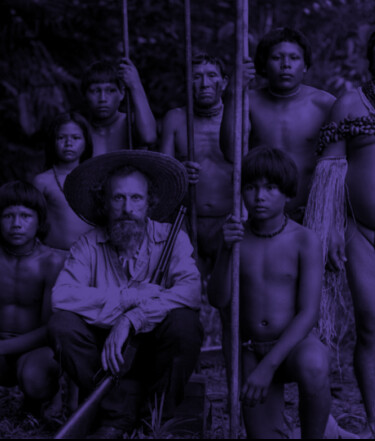
In December 2021, Meta suspended the page without warning and without explanation. The trigger was likely a program listing for the film “The Shaman and the Snake.” The accompanying film still showed a group of Indigenous people wearing loincloths, which an algorithm may have classified as prohibited nudity. Attempts by the Filmwerkstatt to contact Meta went unanswered. It wasn’t until June 2023—a year and a half after the suspension—that Meta reinstated the page. During this time, the association was unable to promote its offerings and thus had greater difficulty reaching supporters.
Together with the GFF and the law firm Hausfeld, the Filmwerkstatt filed a lawsuit in March 2023 before the Düsseldorf Regional Court. The court ruled the suspension unlawful in July 2024. In April 2025, the Düsseldorf Higher Regional Court upheld this decision.
Crucially, both courts ruled that they had jurisdiction because the case involved an antitrust dispute. They found that Meta had abused its dominant market position by blocking the page. During the litigation, however, the company had argued that the Filmwerkstatt should have filed the lawsuit in Ireland, where Meta is headquartered.
More information on the case is available here.
Complaints About Lack of Transparency in Moderation Decisions
With our Center for User Rights, we are committed to ensuring that platforms clearly and transparently explain how they moderate content and on what basis.
Because platforms often fail to provide sufficient justification for their moderation decisions—thereby violating European law (specifically, Article 17 of the Digital Services Act)—we have filed complaints in several cases with the Irish regulatory authority responsible for these platforms—against TikTok, YouTube, Instagram, and LinkedIn.
More information about the complaints is available here.