Peaceful demonstrations must not be banned across the board
Freedom of assembly protects the right to express one's views publicly and collectively with others. This right also applies at major political events where many demonstrations take place simultaneously.

Peaceful protest treated as a general threat
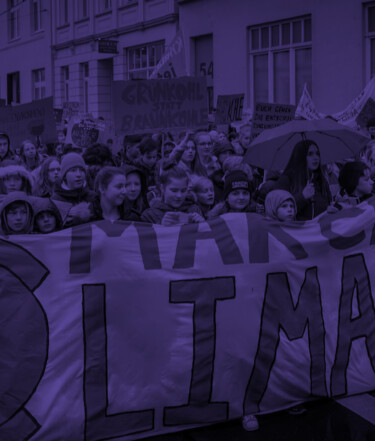
Hamburg was a controversial host city for the G20 summit in July 2017, when the heads of state and government of the G20 countries gathered to discuss global challenges such as international trade, economic growth and climate protection. Numerous people announced plans to protest. The summits regularly attract criticism and mobilise people who want to protest the policies of the G20 countries. By hosting the summit right in the city centre, Hamburg therefore also had to expect large-scale protests. The city had to prepare for people to express their criticism publicly and visibly.
Hanni Gramann registered a demonstration on behalf of the anti-globalisation non-governmental organisation Attac under the slogan "Free Trade Drives Displacement". Through a symbolic visual action and speeches, she wanted to draw attention to the link between free trade and the causes of forced displacement.
She invoked the right to freedom of assembly. This right protects the right of all of us to express our views publicly and collectively with others. It also applies at major political events where many demonstrations take place simultaneously.
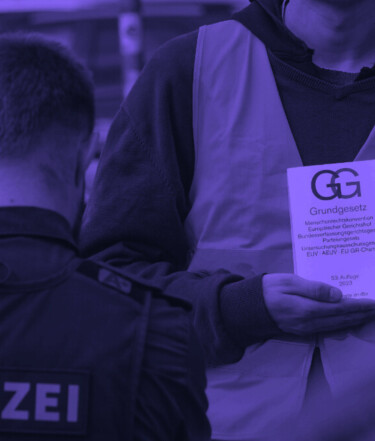
However, the City of Hamburg feared blockades and violent confrontations due to the various protests surrounding the summit. It therefore imposed a blanket ban on assemblies well in advance, covering the entire city centre and areas far beyond it. The ban affected not only assemblies that the authorities considered to pose a specific threat, but also peaceful demonstrations, including the one planned by Gramann.
Gramann challenged the ban in court. She was unsuccessful in the urgent interim proceedings. In the main proceedings, the Hamburg Administrative Court ruled in her favour. However, the Hamburg Higher Administrative Court overturned that judgment. In October 2026, with our support and represented by lawyer Waltraut Verleih, Gramann filed an appeal with the Federal Administrative Court.
Setting clear limits on bans on assemblies
Through this appeal, we want the Federal Administrative Court to declare the ban on assemblies unlawful insofar as it affected peaceful demonstrations.
The case raises a legal question that extends far beyond the G20 summit: the ruling should establish once and for all the legal limits the state must observe when imposing bans on assemblies through general administrative orders.
We want to secure a landmark ruling that makes clear that peaceful demonstrations must be allowed to take place even when authorities suspect that the overall situation may pose risks. We want a landmark ruling that establishes that peaceful assemblies must not be subjected to restrictions based on presumed dangers arising from a diffuse overall situation.
In doing so, we aim to strengthen freedom of assembly at future major political events and ensure that bans on assemblies are only permissible in the face of specific threats and as a last resort.
Freedom needs fighters
Standing Up for Fundamental Values in Court